More questions to explore
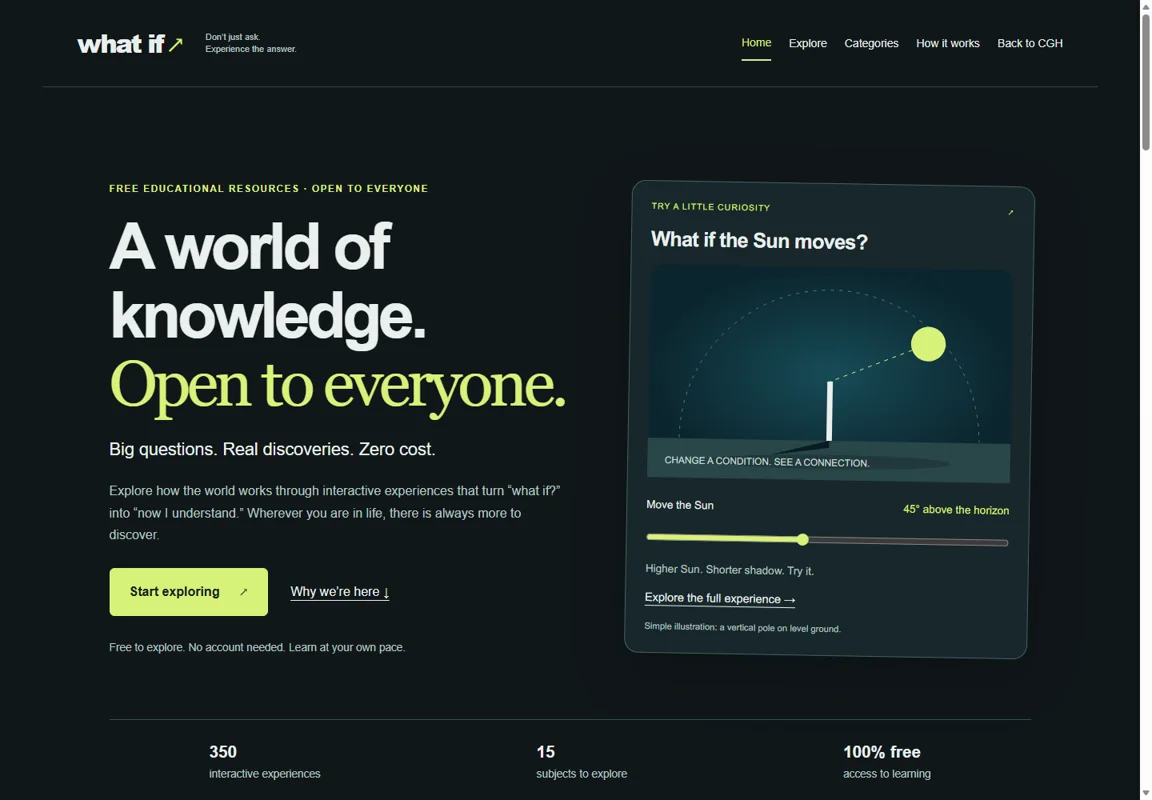
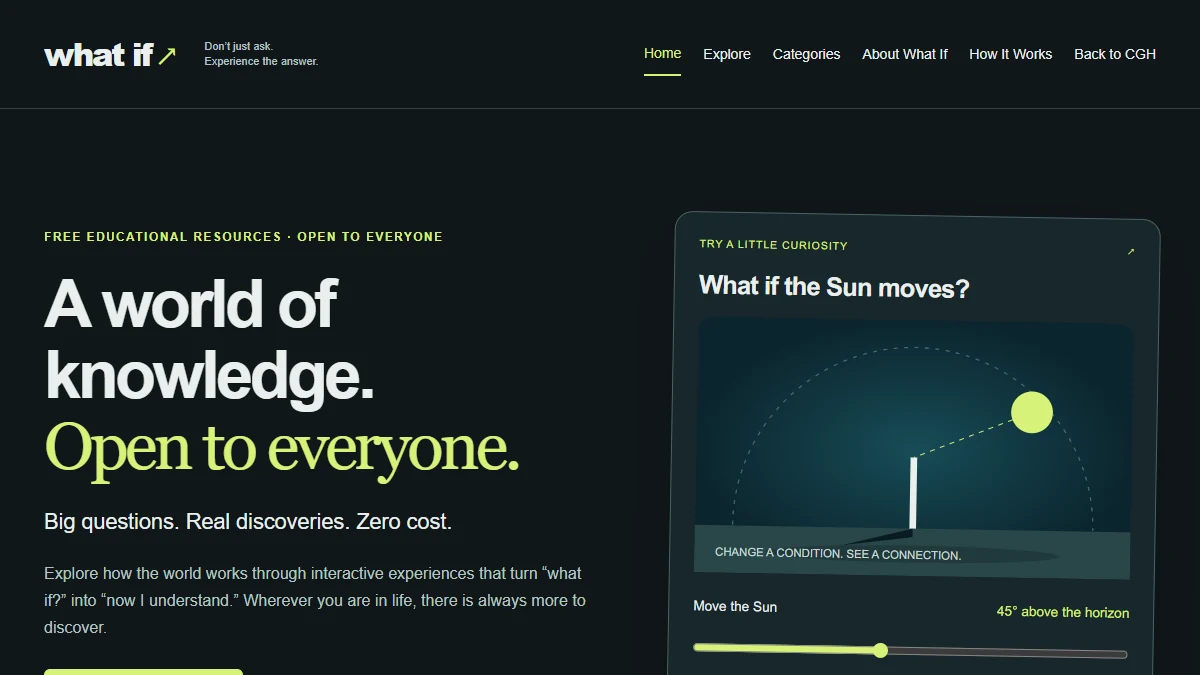
What If expanded to 400 interactive experiences on October 23, 2026. The latest release adds experiences 351–400 to the free educational platform, giving learners more ways to change a condition, compare results, and examine the model behind an answer.
The additions include the effect of a bottle’s neck on resonance, vibration isolation, soil consolidation, linked genes, probability updates, and errors in numerical calculations. Computing topics include error-correcting codes, packet transmission, retry limits, rate limiting, and cache behavior.
Make a prediction, then compare
The new experiences include controls, topic diagrams, guided scenarios, prediction prompts, and saved comparisons. Selectable variable-sweep graphs have accessible data tables so visitors can examine the numbers as well as the plotted result.
For example, a learner can explore why tiny additions may disappear when added to a large floating-point sum, or how a limited retry budget changes the chance of completing a request. Equations, assumptions, and primary references help explain the result.
Keep the limits in view
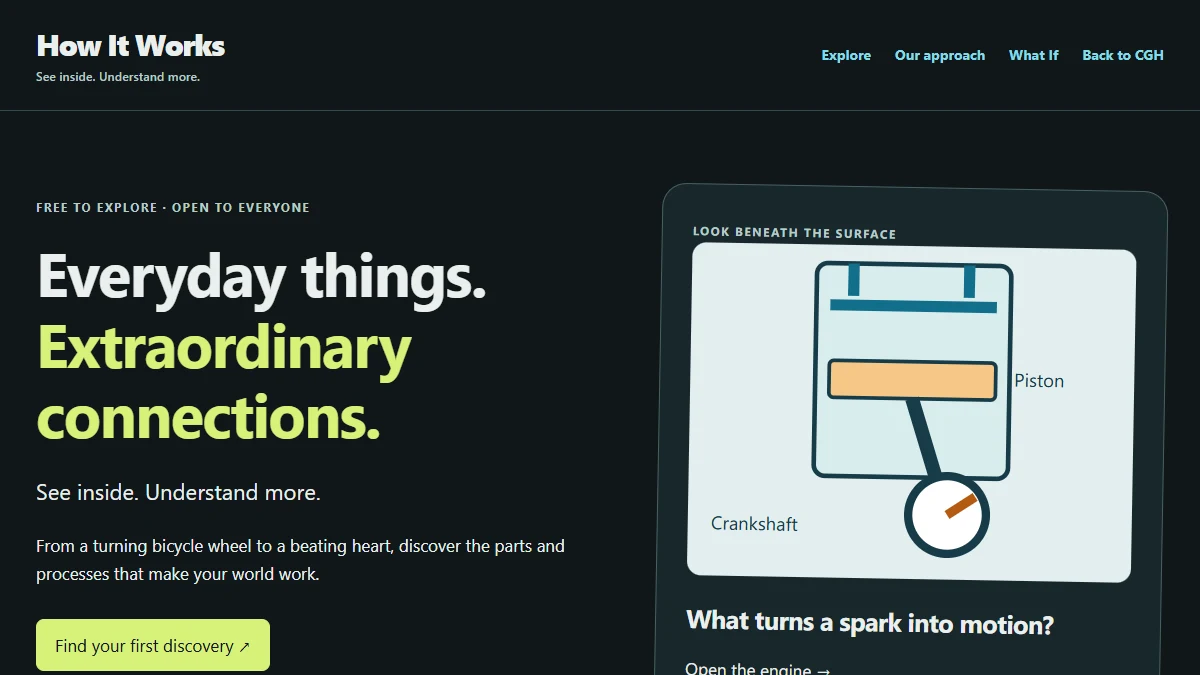
What If remains free to explore without an account. Its menu now also links directly to How It Works, the companion collection explaining everyday mechanisms and processes.
These are educational models, not independently calibrated predictions or professional assessments. Read each experience’s limits and source notes before applying an idea beyond the lesson. The catalog is the current starting point for all 400 experiences.