
A desktop that people can now evaluate
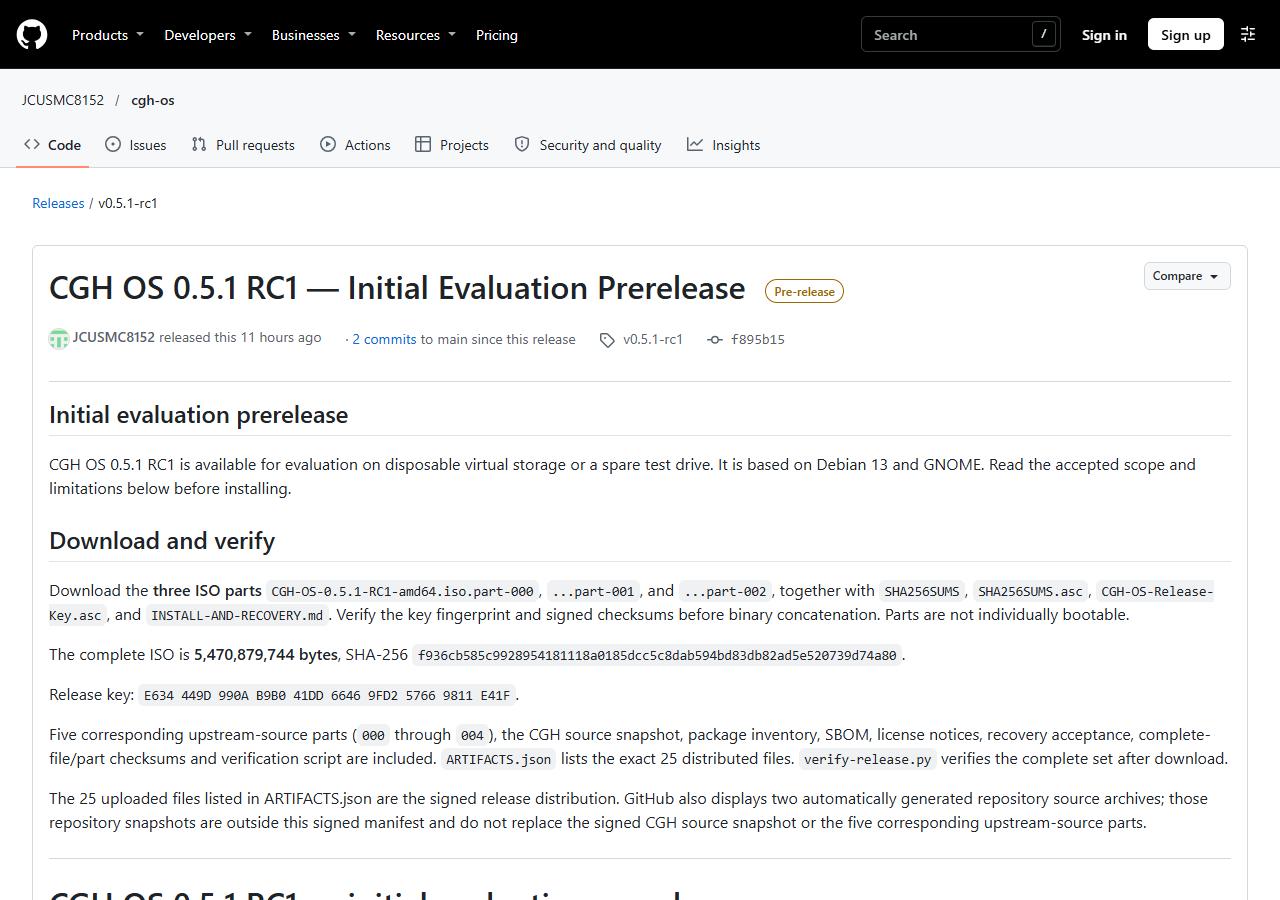
CGH OS has moved from a development preview to a publicly downloadable evaluation candidate. Version 0.5.1 RC1 was published on November 1, 2026, at 8:33 p.m. Eastern, giving interested testers an official download and a documented starting point.
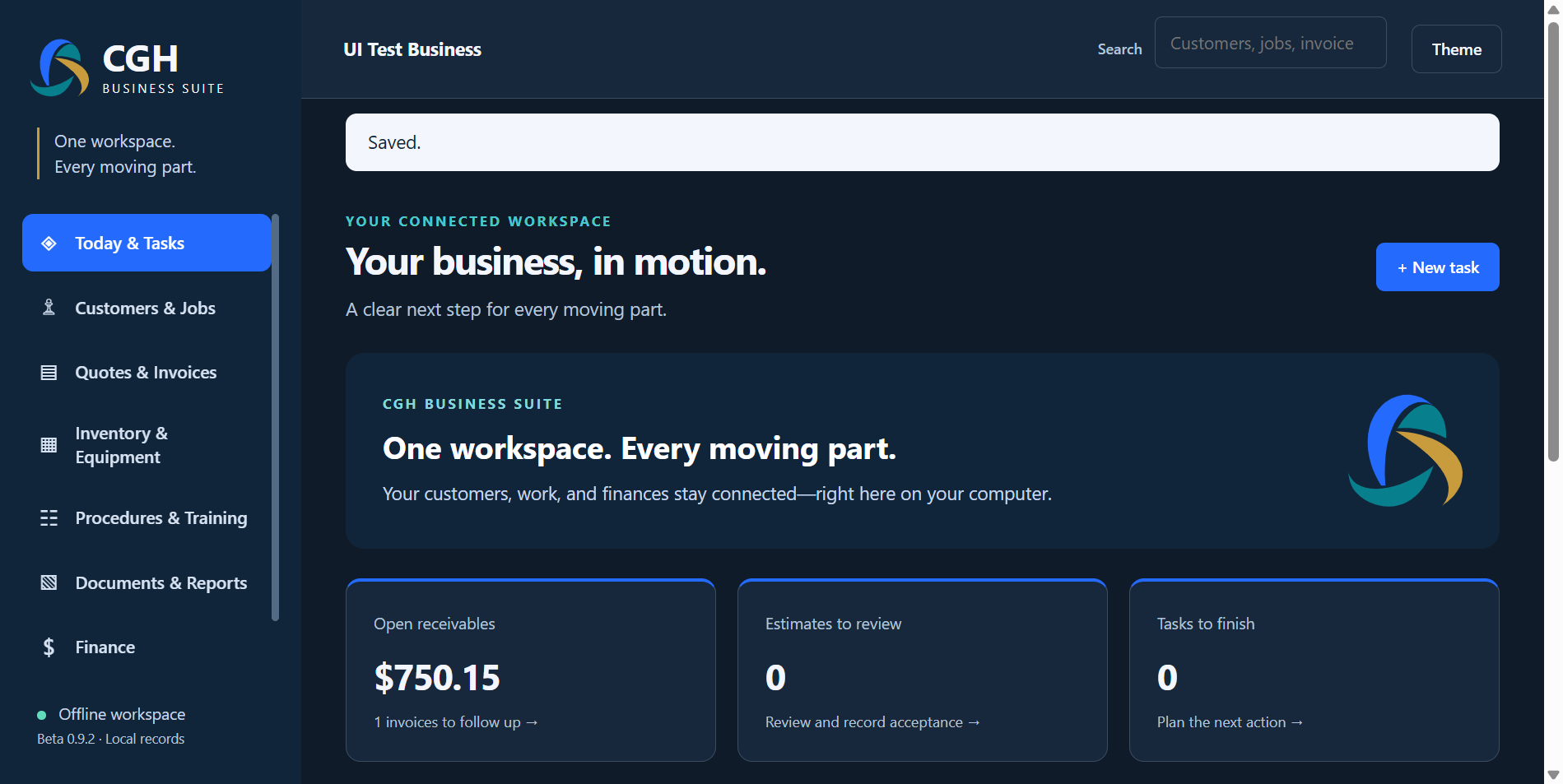
Built on Debian 13 with GNOME, the independent CGH derivative brings CGH Budget, CGH Workspace and desktop integration together. Its Control Center organizes Everyday, Developer, Home Lab and Security areas. The release is intended for disposable virtual storage or a spare test drive; it does not establish readiness for an important daily-use computer.
Download the complete image and verify it
The official GitHub release supplies the installation image in three ordered parts. Download all three and follow INSTALL-AND-RECOVERY.md to verify the signing-key fingerprint, signed checksums and reconstructed image. Each part is a piece of the image, not a separately bootable installer.
The release also includes the matching CGH source snapshot, five corresponding upstream-source parts, package and software inventories, license notices and a verification script. The signed distribution contains 25 files. GitHub’s two automatically generated repository source archives do not replace that corresponding-source delivery.
What the current tests establish
The release record documents an installation on a disposable virtual disk, installed-system boot, graphical login, core application launches and an actual reboot. Synthetic Budget and Workspace records and a saved document persisted through that reboot. Manual recovery testing restored synthetic data to separate disposable storage.
Those results have defined limits. The earlier HP laptop story describes a different development candidate and does not establish physical-hardware acceptance for this RC1 image. Secure Boot, encrypted installation, dual boot, Bluetooth, suspend and wake, audible sound quality, external displays and printers remain outside its accepted scope. Recovery testing does not establish bare-metal rollback or damaged-system repair.
Start with the release notes
Read the release notes and installation guidance before choosing a test environment. Keep existing security protections enabled, preserve important data and use the documented evaluation setup. The on-demand antivirus scanner is not a claim of real-time malware blocking or a complete security certification.
CGH OS is developed independently by Crawford Group Holdings. Debian and other bundled components retain their own licenses, copyrights and trademarks; Debian does not endorse this derivative. This evaluation publication makes no production-support term, compatibility warranty or fixed update-cadence commitment. The official release page contains the current materials and defect-reporting contact.